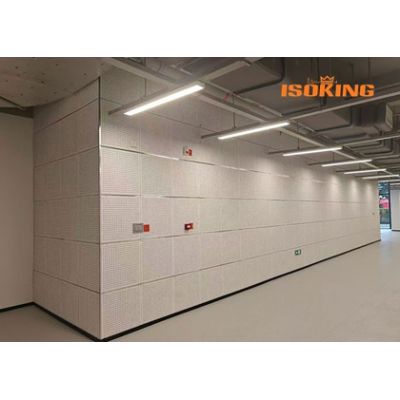
The rapid growth of cloud computing, high-density server racks, and AI data centers has created an invisible yet severe challenge: industrial noise pollution. Inside a modern data center, powerful HVAC systems, massive cooling fans, and backup generators operate 24/7. This continuous, high-decibel drone not only impacts the health of on-site maintenance engineers but can also cause structural micro-vibrations.
To address this, leading data center architects are turning to high-performance architectural acoustics. This case study explores how Perforated Wooden Acoustic Panels with Fiberglass Backing provide an ideal soundproofing and noise reduction solution for modern server environments.
Standard walls reflect sound, creating an echo chamber that amplifies mechanical hums. The composite perforated wood and fiberglass panel solves this through a dual-action acoustic mechanism.
The front layer features a precision-engineered perforated timber or MDF panel. When sound waves hit the wall, instead of bouncing back, they pass directly through the scientifically calculated micro-perforations. This surface also provides a clean, modern, and professional aesthetic suitable for high-tech facilities.
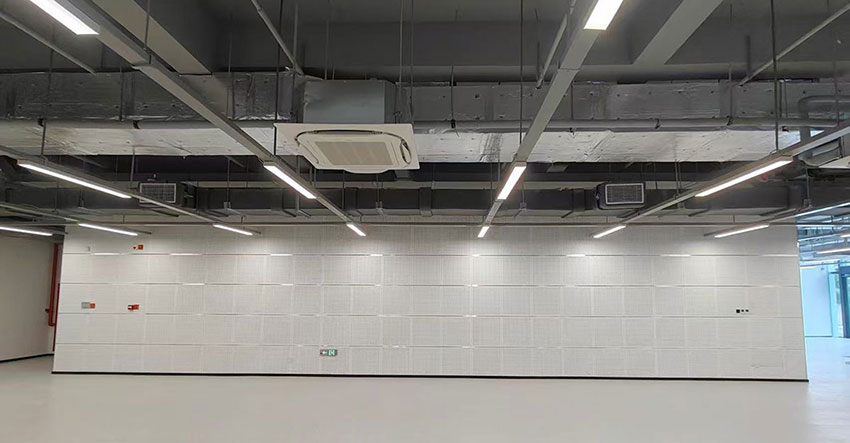
Once the sound waves penetrate the perforations, they encounter a high-density fiberglass (glass wool) backing. The acoustic energy forces the tiny, porous glass fibers to vibrate. This friction converts harmful sound energy into trace heat energy, effectively capturing and neutralizing medium-to-low frequency mechanical resonance.
Why do engineering contractors specify this particular material combination over standard drywall or bare insulation?
This high-performance acoustic treatment is strategically deployed across various zones within the facility:
Large, expansive server halls require extensive wall coverage to prevent echo accumulation. Utilizing these panels along the main perimeter walls drastically lowers ambient noise levels.
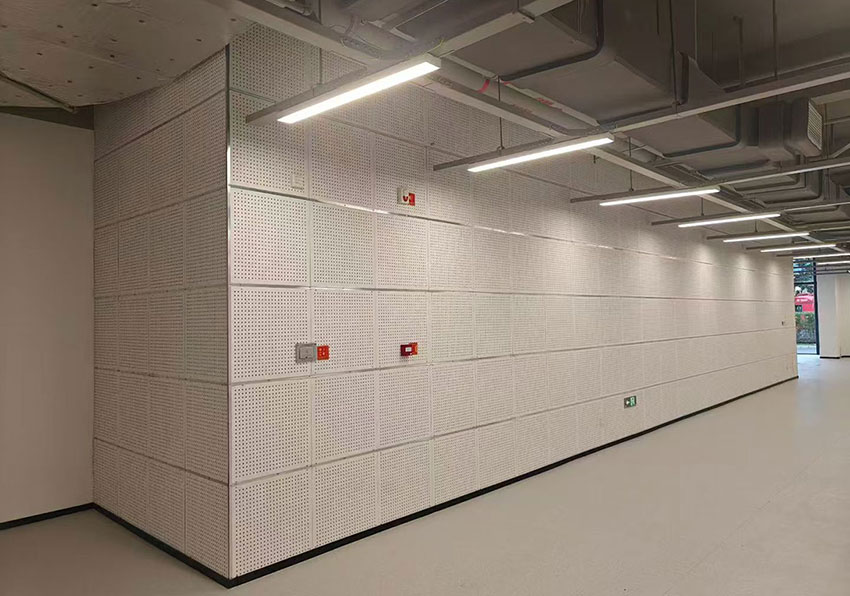
Backup generators and UPS systems create high-impact, low-frequency sound. Installing heavy-duty fiberglass-backed perforated panels on these walls prevents the noise from transferring to surrounding offices.
Data center technicians and engineers require a quiet environment to monitor network health. Acoustic treatment in the control room reduces operator fatigue and improves communication clarity.
Managing data center noise requires a balance between architectural durability, high-level fire safety, and professional acoustic performance. The combination of a perforated wooden face with a fiberglass core offers a proven, dual-layer defense against industrial equipment noise.
Contact our technical engineering team today to request customized panel dimensions, specific perforation patterns, or to view our certified fire-rating and NRC testing reports!
Get a Free Quote & Technical SupportAbout IKING — Data-Driven Manufacturing for Better Insulation
For more than 19 years, IKING has been focusing on the manufacturing of insulation and acoustic materials, including glass wool, rock wool, and related systems.
99.7% on-time delivery rate
<0.3% defect rate
100% traceability for every batch
[ Read More >>]


