Tel:+86-22-60767280
WhatsApp:+86 19902064698
E-mail:ian@iking-glasswool.com
Add:14th Floor, Building 2, Zhiyun Building, Hedong District, Tianjin

High Acoustic Performance
NRC up to 0.98, with ≥98% mid-to-high frequency sound absorption, effectively reducing noise and improving speech clarity.
Microporous Felt Surface
Composite decorative felt enhances diffuse sound reflection and ensures balanced sound absorption across indoor spaces.
Multiple Thickness Options
Panel thickness from 15–30 mm, optimizing acoustic performance while maintaining ceiling height and load control.
Redefining the Acoustic Experience of Commercial Spaces
1. Core Value of System-Level Solutions
Core Positioning: The ISOIKING fiberglass sound-absorbing ceiling system provides an integrated solution for commercial/industrial/public buildings with a dual core of "acoustic performance + structural stability." Key data supports this: mid-to-high frequency noise absorption efficiency ≥98%, NRC (noise reduction coefficient) up to 0.98, precisely addressing indoor acoustic pain points.
Product Advantages: Utilizes formaldehyde-free, environmentally friendly fiberglass substrate with an adjustable density of 100-120 kg/m³ to suit different noise reduction scenarios; the surface composite microporous decorative felt enhances sound wave diffuse reflection, significantly improving speech clarity and covering the acoustic needs of diverse scenarios such as conference rooms, libraries, and shopping malls.
System Advantages: Modular design supports flexible configuration, adapting to various building structures such as large-span factories and complex commercial complexes; standardized components offer high compatibility, reducing construction difficulty and making it the preferred acoustic solution for architects, contractors, and owners.
2. System Core Components: Standardized Configuration Throughout the Process
High-Performance Fiberglass Sound-Absorbing Panels
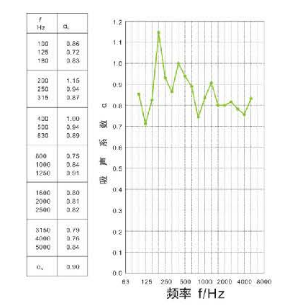
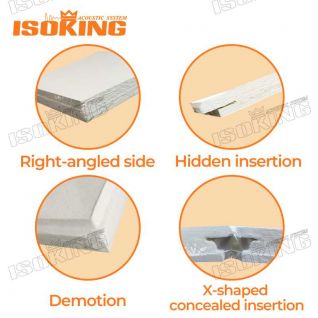
Material Characteristics and Acoustic Performance: Utilizes formaldehyde-free environmentally friendly fiberglass with an adjustable density of 100-120kg/m³; the surface is composited with microporous decorative felt to enhance diffuse sound reflection, achieving an NRC of up to 0.9, precisely adapting to different noise reduction scenarios; panel thickness is available from 15-30 mm, balancing sound absorption needs, space height, and load-bearing requirements.
Modular Sound-Absorbing Ceiling Keel System
Structural Design and Functional Advantages: The suspended keel uses high-strength galvanized steel, achieving a load-bearing capacity of 50 kg/m² at a 600 mm spacing; concealed installation ensures seamless connection, enhancing the overall spatial integrity; pre-drilled holes precisely match the clips, supporting ±2 mm error calibration; integrated hanging components are compatible with T/L-type keels and various substrates, offering wide adaptability.
All-Scenario Adaptable Installation Accessories
Standardized Accessory Advantages: Includes 20+ types of ISO 9001 standard accessories; embedded buckles offer lateral tensile strength up to 10kg, ensuring strong stability; clip-on accessories allow for quick replacement in 30 seconds, improving maintenance efficiency by 60%; concealed components achieve millimeter-level gap control, suitable for high-end scenarios.
3. FAQ
A: What is a fiberglass acoustic ceiling used for?
Q: A fiberglass acoustic ceiling is designed to reduce indoor noise and echo, improving overall acoustic comfort. It is commonly used in offices, conference rooms, libraries, shopping malls, and other commercial or public spaces.
A: How does a fiberglass acoustic ceiling reduce noise?
Q: The fiberglass core absorbs sound waves, especially mid and high frequencies, while the felt surface helps scatter sound evenly. This combination reduces echo and improves speech clarity in the room.
A: Is fiberglass acoustic ceiling safe and eco-friendly?
Q: Yes. The panels are made from formaldehyde-free fiberglass, making them safe for indoor use and suitable for projects with environmental requirements.
A: What thickness should I choose?
Q: Thickness options usually range from 15 mm to 30 mm.
A: Thinner panels are suitable for spaces with limited ceiling height.
Q: Thicker panels provide better sound absorption in noisier environments.
A: Can the ceiling system be installed in different building types?
Q: Yes. The modular design allows installation in offices, commercial buildings, factories, and public spaces, adapting to different ceiling structures.
About IKING — Data-Driven Manufacturing for Better Insulation
For more than 19 years, IKING has been focusing on the manufacturing of insulation and acoustic materials, including glass wool, rock wool, and related systems.
99.7% on-time delivery rate
<0.3% defect rate
100% traceability for every batch
[ Read More >>]